Looker End of Life (EOL) Dates and End of Support (EOS) Dates
Looker end of life (EOL) and end of support (EOS) dates: 65 Looker versions have reached EOL, including Looker 26.16 (EOL date: Oct 31, 2026) — no longer receiving security updates or patches. Looker 26.12 (ESR) reaches its End of Support date on Nov 30, 2026 — plan your upgrade path now. Also see Angular lifecycle dates for related end-of-life information.
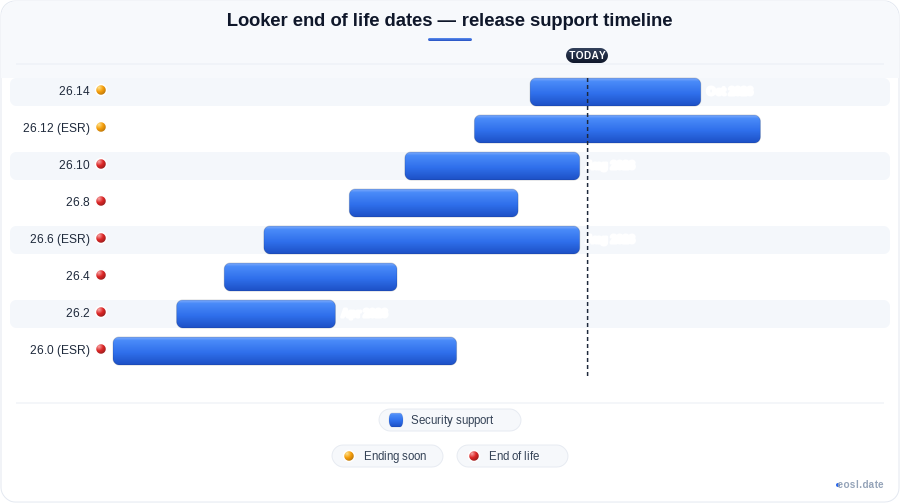
Looker Releases Nearing End of Life - Support Ending Soon (5)
| Release | Released | Support Status | LTS |
|---|---|---|---|
| 26.12 (ESR) | (4 months ago) | (in 6 days) | LTS |
| 26.20 | (1 month and 2 weeks ago) | (in 1 month and 1 week) | - |
| 26.22 | (1 month and 2 days ago) | (in 2 months) | - |
| 26.24 | (2 weeks and 4 days ago) | (in 3 months) | - |
| 26.18 (Upcoming ESR) | (2 months ago) | (in 3 months) | - |
Looker End of Life (EOL) Releases - No Longer Supported (65)
| Release | Released | Support Status | LTS |
|---|---|---|---|
| 26.16 | (2 months ago) | (3 weeks and 3 days ago) | - |
| 26.14 | (3 months ago) | (3 weeks and 3 days ago) | - |
| 26.10 | (5 months ago) | (2 months ago) | - |
| 26.8 | (6 months ago) | (3 months ago) | - |
| 26.6 (ESR) | (7 months ago) | (2 months ago) | LTS |
| 26.4 | (8 months ago) | (5 months ago) | - |
| 26.2 | (9 months ago) | (6 months ago) | - |
| 26.0 (ESR) | (10 months ago) | (4 months ago) | LTS |
| 25.20 | (1 year ago) | (7 months ago) | - |
| 25.18 (ESR) | (1 year and 1 month ago) | (8 months ago) | LTS |
| 25.16 | (1 year and 2 months ago) | (10 months ago) | - |
| 25.14 | (1 year and 3 months ago) | (11 months ago) | - |
| 25.12 (ESR) | (1 year and 4 months ago) | (11 months ago) | LTS |
| 25.10 | (1 year and 5 months ago) | (1 year and 1 month ago) | - |
| 25.8 | (1 year and 6 months ago) | (1 year and 2 months ago) | - |
| 25.6 (ESR) | (1 year and 7 months ago) | (1 year and 2 months ago) | LTS |
| 25.4 | (1 year and 8 months ago) | (1 year and 4 months ago) | - |
| 25.2 | (1 year and 9 months ago) | (1 year and 5 months ago) | - |
| 25.0 (ESR) | (1 year and 10 months ago) | (1 year and 5 months ago) | LTS |
| 24.20 | (1 year and 11 months ago) | (1 year and 7 months ago) | - |
| 24.18 (ESR) | (2 years ago) | (1 year and 8 months ago) | LTS |
| 24.16 | (2 years and 2 months ago) | (1 year and 10 months ago) | - |
| 24.14 | (2 years and 3 months ago) | (1 year and 11 months ago) | - |
| 24.12 (ESR) | (2 years and 4 months ago) | (1 year and 11 months ago) | LTS |
| 24.10 | (2 years and 5 months ago) | (2 years and 1 month ago) | - |
| 24.8 | (2 years and 6 months ago) | (2 years and 2 months ago) | - |
| 24.6 (ESR) | (2 years and 7 months ago) | (2 years and 2 months ago) | LTS |
| 24.4 | (2 years and 8 months ago) | (2 years and 4 months ago) | - |
| 24.2 | (2 years and 9 months ago) | (2 years and 5 months ago) | - |
| 24.0 (ESR) | (2 years and 10 months ago) | (2 years and 5 months ago) | LTS |
| 23.20 | (3 years ago) | (2 years and 7 months ago) | - |
| 23.18 (ESR) | (3 years and 1 month ago) | (2 years and 8 months ago) | LTS |
| 23.16 | (3 years and 2 months ago) | (2 years and 11 months ago) | - |
| 23.14 | (3 years and 3 months ago) | (3 years ago) | - |
| 23.12 (ESR) | (3 years and 4 months ago) | (2 years and 11 months ago) | LTS |
| 23.10 | (3 years and 5 months ago) | (3 years and 2 months ago) | - |
| 23.8 | (3 years and 6 months ago) | (3 years and 3 months ago) | - |
| 23.6 (ESR) | (3 years and 7 months ago) | (3 years and 2 months ago) | LTS |
| 23.4 | (3 years and 8 months ago) | (3 years and 5 months ago) | - |
| 23.2 | (3 years and 9 months ago) | (3 years and 6 months ago) | - |
| 23.0 (ESR) | (3 years and 10 months ago) | (3 years and 5 months ago) | LTS |
| 22.20 | (4 years ago) | (3 years and 8 months ago) | - |
| 22.18 (ESR) | (4 years and 1 month ago) | (3 years and 8 months ago) | LTS |
| 22.16 | (4 years and 2 months ago) | (3 years and 11 months ago) | - |
| 22.14 | (4 years and 3 months ago) | (4 years ago) | - |
| 22.12 (ESR) | (4 years and 4 months ago) | (3 years and 11 months ago) | LTS |
| 22.10 | (4 years and 5 months ago) | (4 years and 2 months ago) | - |
| 22.8 | (4 years and 6 months ago) | (4 years and 3 months ago) | - |
| 22.6 (ESR) | (4 years and 7 months ago) | (4 years and 2 months ago) | LTS |
| 22.4 | (4 years and 8 months ago) | (4 years and 5 months ago) | - |
| 22.2 | (4 years and 9 months ago) | (4 years and 6 months ago) | - |
| 22.0 (ESR) | (4 years and 10 months ago) | (4 years and 5 months ago) | LTS |
| 21.20 | (5 years ago) | (4 years and 8 months ago) | - |
| 21.18 (ESR) | (5 years and 1 month ago) | (4 years and 8 months ago) | LTS |
| 21.16 | (5 years and 2 months ago) | (4 years and 11 months ago) | - |
| 21.14 | (5 years and 3 months ago) | (5 years ago) | - |
| 21.12 (ESR) | (5 years and 4 months ago) | (4 years and 11 months ago) | LTS |
| 21.10 | (5 years and 5 months ago) | (5 years and 2 months ago) | - |
| 21.8 | (5 years and 6 months ago) | (5 years and 1 month ago) | - |
| 21.6 (ESR) | (5 years and 7 months ago) | (5 years and 2 months ago) | LTS |
| 21.4 | (5 years and 8 months ago) | (5 years and 5 months ago) | - |
| 21.0 (ESR) | (5 years and 10 months ago) | (5 years and 5 months ago) | LTS |
| 7.20 | (6 years ago) | — | - |
| 7.18 | (6 years and 1 month ago) | — | - |
| 7.16 | (6 years and 2 months ago) | — | - |
If your dashboards run on Looker, a business intelligence and data exploration platform inside Google Cloud Platform, you need to know when each release stops getting fixes. This guide explains Looker end of life timing: which releases are still covered, which end on 31 October 2026, and how to plan your move before coverage lapses.
Looker End of Life Dates for Looker-Hosted Services
With a Looker-hosted instance, Google runs the servers for you. This managed service follows a published planned maintenance schedule, and your instance can be briefly unavailable while updates or server work happen. An upgrade is still triggered by contacting customer support, so it never happens on its own.
Each new minor version rolls out slowly over two to three weeks. Every release lists an expected rollout start and an expected final deployment date on the Release Highlights page, so check both dates before you assume your instance has the software change. No releases or deployments happen in December, which leaves 11 releases a year.
Here is how to read those dates on a real case. Release 26.16 shipped on 4 September 2026 and its support ends on 31 October 2026, which is 57 days of coverage. If your instance still runs it today, 27 October, you have four days left, so request the move now, before those dates pass and the software is unsupported.
Customer-Hosted Instances and the End of Support Date
A customer-hosted installation is the self-hosted option, so the install work on this software is yours. When a new build is ready, every Technical Contact listed on the instance gets an email with a link to the update file in JAR format, the release notes and install instructions. Keep that contact list current. If the only person on it left your company, nobody hears about the end of support date until it has passed. Compare your servers against the table below at the start of every month, since missed dates are the usual cause of surprise outages.
Extended Support Release Program and Support Status
The Extended Support Release program, or ESR, suits teams that cannot move every month. ESR releases arrive quarterly instead of monthly and get three months of support. Issues rated S1 and S2 are patched back to the currently supported ESR releases, which covers security vulnerabilities and serious bugs that hurt performance.
Participants must pair production instances with staging instances. A new ESR build sits in ESR-staging for a month and is considered pre-stable, so you can test it before it reaches production. The support status of each build, and whether it belongs to the ESR track, appears in the table below.
EOL Dates for Current and Prior Versions
These dates are accurate as of 27 October 2026. Release 26.22 is the newest and has no announced end date.
| Release | Released | ESR release? | Support ends |
|---|---|---|---|
| 26.22 | 22 Oct 2026 | No | Supported, no date yet |
| 26.20 | 8 Oct 2026 | No | 31 Dec 2026 |
| 26.18 | 17 Sep 2026 | ESR (upcoming) | 28 Feb 2027 |
| 26.16 | 4 Sep 2026 | No | 31 Oct 2026 |
| 26.14 | 6 Aug 2026 | No | 31 Oct 2026 |
| 26.12 | 9 Jul 2026 | ESR | 30 Nov 2026 |
| 26.10 | 4 Jun 2026 | No | 31 Aug 2026 (ended) |
| 26.6 | 25 Mar 2026 | ESR | 31 Aug 2026 (ended) |
| 26.0 | 8 Jan 2026 | ESR | 30 Jun 2026 (ended) |
Anything older than 26.12 on this list is already unsupported. The long-retired 7.x line is also out of coverage, and its oldest builds are past the end of maintenance by years. Treat the 31 October 2026 dates as the next hard edge: 26.14 and 26.16 lose coverage that day, while the quarterly ESR track gives 26.12 until 30 November 2026.
- Fastest path: stay on the newest monthly build and you never see an EOL date.
- Slower path: follow the ESR track and move once a quarter.
End of Service Life Definitions: Maintenance Term and Support Term
Vendors use end of service life loosely, so it helps to pin down the pieces and their dates. Looker's pages speak in releases and support ends, but the general vendor model behind them is worth knowing. Many version policy documents define a maintenance term, when fixes keep shipping, and a support term, when the vendor's team still helps with a build. Maintenance covers bugs, performance and security patches delivered as a maintenance release, and support is that team's help with your software issues.
As a general convention, policies of this type often tie the maintenance term to the day a major release first goes on sale. A major release is the leftmost number in a version code, such as 5 in 5.2.9, a minor release is the middle number and the maintenance release is the last. One common vendor pattern, not Looker's formula, is to keep each major release maintained for the later of two dates:
$$\text{Maintenance end} = \max\left(\text{GA}_{N} + 30\ \text{months},\ \text{GA}_{N+1} + 18\ \text{months}\right)$$
For EOSL math, take a hypothetical major release 3.0 that reached general availability on 12 March 2022, followed by major release 4.0 on 20 June 2023. Thirty months after the first date is 12 September 2024, and eighteen months after the second is 20 December 2024. The later date wins, so 20 December 2024 is when that maintenance term ends, and six extra months of support would run to 20 June 2025. This is an illustration of the common pattern, not Looker's own rule.
Software Product Retirement and EOSL Planning
Looker publishes its own list of supported releases, but retirement works the same way across vendors and is a bigger step than one release ending. When a vendor retires a software product, no new major releases arrive, and some vendor policies promise at least 12 months of support after the retirement notice. That notice date is your signal to begin planning, well before the EOSL date itself.
The EOSL date is the point where the vendor stops patching and renewing support. For a customer-hosted Looker server, a security flaw then stays open and a ticket may be refused; for a hosted instance, you still have to request the move before the EOSL date arrives. Hardware has its own sequence of general availability, end of sale and end of development, but for this software the EOSL date on your release is the one that matters.
- List each Looker instance, hosted or customer-hosted, and the EOSL date of its release.
- Flag any hardware or platform a build depends on.
- Note whether an end of sale has been announced for that hardware.
- Plan the move at least one quarter before each of those dates.
Counting EOSL dates this way ties every instance back to the table above: 26.14 and 26.16 reach their EOSL on 31 October 2026, and 26.12 follows on 30 November 2026 for teams on the ESR track. Put those EOSL dates in your team calendar, because an EOSL you only notice afterwards is already a missed deadline.
Lifecycle Notifications and the Legacy Feature Schedule
You do not have to watch dates by hand. Any user can opt in to release notes from Account Settings in Looker, and anyone listed as a Technical Contact under Admin > General Settings receives release notifications automatically. An RSS feed is also available for the product, so a feed reader can warn you when the next date moves.
Looker also publishes a list of officially supported releases and a legacy feature schedule, a timeline showing when each of those features has been or will be removed. Read it alongside the table, because a removed feature can vanish in a build you were planning to adopt.